Can Charleroi Airport’s ‘mini-Tomorrowland’ turn festival arrivals into economic value?
Brussels South Charleroi Airport hosted DJs aged nine to 16 outside Terminal 1 across Tomorrowland’s two three-day weekends, turning six busy July days into a test of how Belgium’s second passenger airport can improve the arrival experience without disrupting…
In 30 seconds
- Young DJs aged nine to 16 performed over two three-day weekends: 17-19 and 24-26 July 2026.
- The performances were held on Plaza Princesse Astrid, opposite Terminal 1, rather than inside Tomorrowland.
- Belgian airports handled more than 36 million passengers in 2025, almost 4% above 2024, Statbel reported.
- Wallonia says more than 3,000 people work at the Charleroi airport site, including nearly 800 airport employees.
Key fact
36 million Belgian airports handled more than passengers in 2025, almost 4% above 2024, Statbel reported.
hosted young international DJs aged nine to 16 outside Terminal 1 for six days across ’s two weekends, 17-19 and 24-26 July 2026, giving arriving passengers a musical welcome before they continued towards the festival in Boom. Télésambre reported that the performers came through the Kids Rave community from Belgium, Australia, South Africa, Japan, Italy, the United Kingdom and Dubai. The programme took place on Plaza Princesse Astrid, in the airport’s public area, under the banner “Welcome to Belgium”.
The performances did not literally turn the airport into Tomorrowland, nor were they part of the festival’s main programme. They were a modest activation at one of the gateways used by festival visitors. Télésambre’s report from the opening afternoon showed DJ Unikorn, the stage name of Leo Chung, playing outside the terminal and adjusting his selections for the mixed airport audience. The airport had not disclosed attendance figures, a commercial budget, sponsorship revenue or any measurable effect on passenger spending by the time of publication.
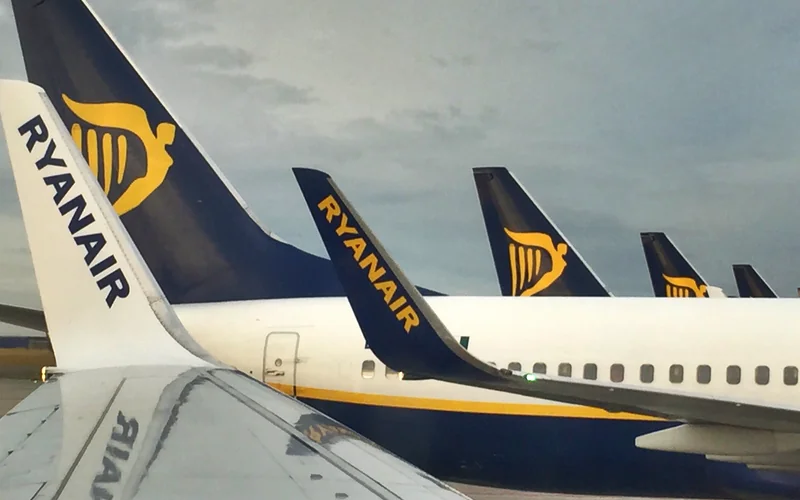
That distinction matters because an airport is first a piece of transport infrastructure, not an entertainment venue. Brussels South Charleroi Airport SA, registered in Belgium under enterprise number 0444.556.344, must keep passengers, baggage, security operations and ground transport moving. Its official company information identifies six airline groups operating from the airport: Ryanair Group, Wizz Air, Pegasus Airlines, Air Corsica, Volotea and Air Arabia Maroc. A temporary performance can improve the atmosphere, but its business value ultimately depends on whether it supports passenger satisfaction and the airport’s reputation without creating congestion, noise or confusion.
The market backdrop is substantial. recorded more than 36 million passengers across Belgian airports in 2025, nearly 4% more than in 2024. The Walloon government describes as Belgium’s second-largest passenger airport and says it handles more than 10 million travellers a year. That scale means even a small improvement in how international visitors perceive their arrival can have reach, although no evidence has been published showing that the Kids Rave performances changed travellers’ spending, onward journeys or likelihood of returning.
Tomorrowland gives the experiment a particularly international audience. The festival’s official travel information listed Brussels South Charleroi alongside Brussels Airport and Eindhoven Airport as departure points for Thursday transfers to DreamVille, with return services on Mondays. In practical terms, the airport is part of a temporary cross-regional visitor chain: passengers land in Wallonia, travel to Boom in Flanders and may spend money on buses, taxis, accommodation, food or other services along the way. The economic opportunity is therefore broader than six days of music, but much of the spending may bypass Charleroi itself unless visitors stop in the city or use local businesses.
For passengers, the immediate household-level issue is cost and convenience. A performance outside the terminal is free to encounter; the journey onward is not. Festival visitors must still pay for an official shuttle or arrange another connection, while ordinary holidaymakers continue to face their usual parking, bus, taxi and airline costs. The airport’s welcome campaign does not reduce those expenses. Its practical value lies instead in making a crowded arrival feel less transactional, particularly for first-time visitors who may otherwise experience Charleroi only as a transfer point.
For BSCA, the exercise reflects a wider change in airport competition. Airports increasingly sell airlines and passengers a complete customer experience rather than runway capacity alone. Retail, food, parking and ground transport all form part of that model, and cultural programming can strengthen a destination’s identity. Yet the evidence here supports calling the initiative an experiment in place-making, not an economic breakthrough. BSCA released no comparable satisfaction score, retail-sales uplift or repeat-visit measure, so claims of a direct return would be premature.
The airport’s economic importance also makes any promotional initiative part of a larger political argument. The Walloon infrastructure administration says more than 3,000 people work on the site, including nearly 800 employed directly by the airport, while it attributes more than 20,750 indirect and induced jobs to the wider activity. The Walloon government renewed the framework for operations through 2045 in 2025 and projected 70,200 annual aircraft movements by 2031, below the long-term planning ceiling of 95,484. These official estimates underline why regional authorities treat BSCA as strategic infrastructure, but they should not be read as benefits created by the DJ event itself.
Residents around the airport see another side of that growth model. The same Walloon permit framework requires permanent noise monitoring, additional air-quality measurement and a declining quota for late-arrival noise. From 2026, the government also tightened limits during sensitive early-morning and late-evening periods. A daytime public-area performance is a different source and scale of sound from aircraft operations, but the surrounding debate explains why airport communications cannot rely solely on celebratory language. Employment and connectivity sit alongside real concerns about disturbance, emissions and public support.
Where this is happening
View on map Brussels South Charleroi Airport →The broader lesson is that major festivals create economic corridors extending well beyond their venues. Charleroi’s role begins before a visitor reaches Boom: it supplies aviation capacity, border processing and links into the Belgian transport network. A recognisable welcome can make that role visible and soften the airport’s utilitarian image. Whether it also delivers durable value for Charleroi businesses depends on coordination with transport operators, tourism bodies and the city—not simply on placing decks outside a terminal.
BSCA has not said whether Kids Rave will return, whether the concept will be used for other large events or how success will be evaluated. The useful next test would be transparent: compare passenger feedback, crowd flow, complaints and commercial activity on performance days with similar peak days, while asking how many visitors actually spend time or money in the Charleroi region. Until such figures appear, “Welcome to Belgium” is best understood as a lively airport reception and a small branding trial, not proof that a mini-Tomorrowland has transformed the local economy.
What to do
For festival travellers, the performances did not replace transport planning: the practical priorities remained flight timing, baggage collection, onward-transfer prices and journey time between Charleroi Airport and DreamVille. Tomorrowland offered outbound transfers on Thursdays and return services on Mondays, so passengers needed to match shuttle availability with their flight dates. The airport performances ran only on 17–19 and 24–26 July 2026, outside Terminal 1 on Plaza Princesse Astrid. Travellers should not expect the airport site to function as an extension of the festival or assume that entertainment changes normal check-in, security or transfer requirements.
The Belgian angle
The initiative gave Charleroi visibility in an international visitor journey normally associated with Tomorrowland’s site in Boom. Its regional economic effect is unquantified: local gains depend on whether passengers use Walloon transport, hospitality and retail businesses rather than treating the airport solely as a transfer point.
EvidenceWell established · 1 primary source + 5 official documents + 1 independent reporting sourceExplore evidence →Hide evidence ↑
- Published:
- 14 Jul 2026, 02:00
- Retrieved by ODIN:
- 25 Aug 2026
- Published:
- 15 Jul 2026, 02:00
- Retrieved by ODIN:
- 25 Aug 2026
- Published:
- 17 Jul 2026, 02:00
- Retrieved by ODIN:
- 25 Aug 2026
- Publication date unavailable
- Retrieved by ODIN:
- 25 Aug 2026
- Published:
- 23 Jul 2026, 02:00
- Retrieved by ODIN:
- 25 Aug 2026
- Published:
- 17 Jul 2025, 02:00
- Retrieved by ODIN:
- 25 Aug 2026
- Publication date unavailable
- Retrieved by ODIN:
- 25 Aug 2026
- Publication date unavailable
- Retrieved by ODIN:
- 25 Aug 2026
Voices & reactions
What the main actors are doing
Reported positions, summarised — not direct quotationsBSCA and visitor-economy stakeholders
Airport managers, tourism bodies and businesses serving international travellers can view the performances as a low-intensity way to improve the passenger experience, associate Charleroi with a globally recognised Belgian event and make the airport more than an anonymous transfer point.
Passengers focused on cost and reliability
Travellers may appreciate free entertainment but are more directly affected by queues, flight punctuality, baggage handling and the price and clarity of onward transport. Without evidence of better service or lower costs, music remains an amenity rather than a solution to their practical concerns.
Airport-area residents and environmental constituencies
Residents concerned about aircraft noise, traffic and emissions may regard celebratory airport branding as incomplete unless it is accompanied by compliance with operating hours, credible monitoring and enforcement of the environmental conditions attached to the airport’s continued growth.
The story, connected
Explore the people, places and ideas in this story
Go beyond the headline. Open a card for sourced context, maps, official links and the other subjects connected to this report.
Continue reading

This story was assembled from verified evidence, with its sources and reasoning recorded as it was written.
This briefing was prepared with AI assistance and passed Belgium Impulse source, provenance and publication-quality checks. methodology.