Can Brussels Airlines still turn a €70 million half-year loss into a 2026 profit?
Brussels Airlines reported a €70 million adjusted operating loss for the first half of 2026, as higher fuel costs and disruptions outweighed rising passenger numbers and revenue.
In 30 seconds
- Adjusted EBIT was minus €70 million, compared with minus €46 million in the first half of 2025.
- Revenue rose 9.5% to €821 million as passenger numbers increased 8.1% to 4.5 million.
- Fuel costs were €64 million higher year on year.
- The long-haul fleet will remain at 11 Airbus A330s rather than expanding by two aircraft in 2027.
Key fact
€70 million Adjusted EBIT was minus , compared with minus €46 million in the first half of 2025.
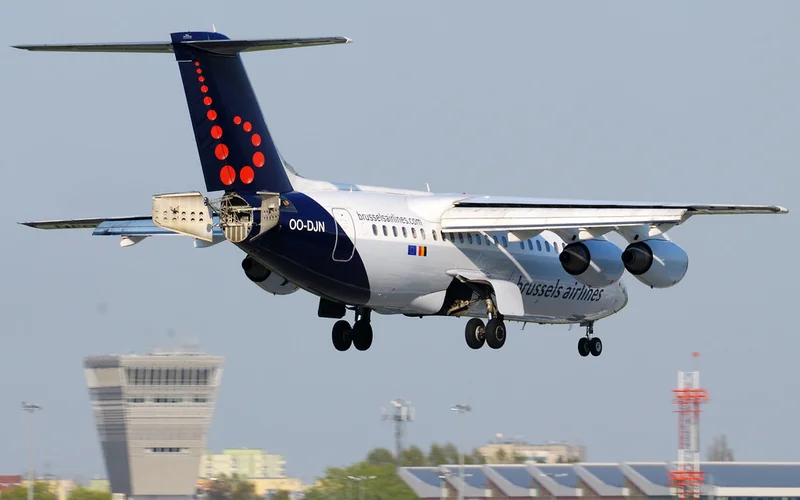
reported on 4 August an adjusted operating loss of €70 million for the first half of 2026, prompting Belgium’s Lufthansa-owned flag carrier to halt a planned expansion of its long-haul fleet. The result matters directly to travellers using Airport—including people working around Belgium’s federal, EU and NATO institutions—because the airline will now keep its Airbus A330 fleet at 11 aircraft and use no wet-leased aircraft in summer 2027.
The loss was substantially worse than the €46 million deficit recorded in the first half of 2025. Yet this was not a story of collapsing demand: Brussels Airlines said it carried 4.5 million passengers on approximately 34,200 flights, increases of 8.1% and 5.5% respectively. Revenue rose by 9.5% to €821 million, while the passenger load factor increased by one percentage point to 80.9%, according to ’s interim figures.
The problem was that costs rose faster. Lufthansa reported operating expenses of €924 million, up from €826 million a year earlier. Brussels Airlines attributed much of that pressure to fuel: its bill increased by €64 million year on year as conflict in the Middle East drove oil-price volatility. The carrier also reported weaker demand and operational complications on parts of its strategically important African network following an Ebola outbreak in East Africa.
For Belgium-based passengers, the figures explain why a busy airport does not automatically produce a profitable home carrier. Brussels Airport separately recorded almost 11.7 million passengers in the first half, 3.6% more than a year earlier. Brussels Airlines nevertheless absorbed both global cost shocks and unusually concentrated domestic disruption at its Zaventem hub, which lies in rather than the City of Brussels.
National demonstrations in March and May restricted airport operations, while industrial action at Belgian air-navigation provider Skeyes halted flight movements for several hours in early June. Brussels Airlines put the combined earnings impact of these disruptions at €3 million. The airport said the March and May actions affected about 55,000 passengers across all carriers.
There are two distinct Belgian readings of that disruption. Brussels Airlines management presents the strikes as external shocks imposed on passengers, employees and a company that was not itself the target. Chief financial officer Nina Öwerdieck said a successful summer would be crucial to securing a positive full-year result and argued that additional flying should support stronger earnings if operations remain stable.
Belgium’s three main union confederations—ACV-CSC, ABVV-FGTB and ACLVB-CGSLB—frame the same actions as protests against the federal government’s social and economic reforms, rather than a campaign against aviation. At their May demonstration, the unions accused Prime Minister Bart De Wever’s government of pursuing reforms without sufficient social consultation and of weakening social protection. That does not remove the cost to travellers or airlines, but it places the airport disruption inside a wider Belgian dispute over pensions, working conditions and public finances.
The immediate strategic consequence is caution. Brussels Airlines and Lufthansa Group have abandoned the plan to add two A330s in 2027, and four airBaltic aircraft operating from Brussels under a wet-lease arrangement until October 2026 will not return the following summer. The planned introduction of new long-haul cabins in business, premium economy and economy remains scheduled for 2027, however.
Where this is happening
View on map Brussels Airport →The broader picture is one of growth without much protection against shocks. Brussels Airlines has strengthened traffic and operational reliability—its irregularity cost per passenger fell by 16%—but its concentration at one Belgian hub, exposure to fuel prices and importance of African routes leave earnings sensitive to events far beyond management’s control. Its place inside Lufthansa provides scale and fuel hedging, while also making fleet decisions part of a larger European airline strategy.
Attention now shifts to the peak summer quarter, when European airlines normally generate much of their annual profit. Brussels Airlines has not published a detailed quarterly threshold for reaching a positive full-year result. Passengers should therefore watch operational stability, fuel prices and any further industrial action; the central commercial question is whether strong demand can finally grow faster than the costs of carrying it.
What to do
Travellers do not need to change existing bookings solely because of these results: no withdrawal from current routes was announced. For summer 2027 planning, however, do not assume that Brussels Airlines will add the previously expected capacity. Its long-haul fleet will remain at 11 Airbus A330s, and four airBaltic aircraft will not return. Passengers who rely on peak-season European or African services should compare schedules and fares early once summer 2027 flights go on sale. The key business date to watch is the full-year 2026 result, which will show whether stronger second-half trading offset the €70 million first-half loss.
The Belgian angle
Brussels Airport and its surrounding Flemish-Brabant economy depend on reliable airline operations, while Brussels-based companies and institutions rely on the hub’s European and African links. The announced restraint limits near-term capacity growth but does not amount to a withdrawal from existing routes.
EvidenceWell established · 1 primary source + 1 official document + 2 independent reporting sources · Background sources: 2Explore evidence →Hide evidence ↑
- Published:
- 4 Aug 2026, 02:00
- Retrieved by ODIN:
- 25 Aug 2026
- Published:
- 4 Aug 2026, 02:00
- Retrieved by ODIN:
- 25 Aug 2026
- Published:
- 4 Aug 2026, 02:00
- Retrieved by ODIN:
- 25 Aug 2026
- Published:
- 15 Jul 2026, 02:00
- Retrieved by ODIN:
- 25 Aug 2026
- Published:
- 11 May 2026, 02:00
- Retrieved by ODIN:
- 25 Aug 2026
- Published:
- 6 Mar 2025, 01:00
- Retrieved by ODIN:
- 25 Aug 2026
Voices & reactions
What the main actors are doing
Reported positions, summarised — not direct quotationsBrussels Airlines management
Management frames the weaker result primarily as the product of external pressures: a €64 million increase in fuel costs, disruption caused by actions outside the airline and complications affecting East African services. Nina Öwerdieck says stronger production should support a better summer if the operating environment remains stable.
Belgian trade-union confederations
ACV-CSC, ABVV-FGTB and ACLVB-CGSLB describe the national actions as opposition to the De Wever government’s pension, labour and social reforms, not as action directed against Brussels Airlines. Their framing emphasises social consultation and worker protection, even though aviation absorbs a disproportionate operational cost.
The story, connected
Explore the people, places and ideas in this story
Go beyond the headline. Open a card for sourced context, maps, official links and the other subjects connected to this report.
Continue reading

This story was assembled from verified evidence, with its sources and reasoning recorded as it was written.
This briefing was prepared with AI assistance and passed Belgium Impulse source, provenance and publication-quality checks. methodology.