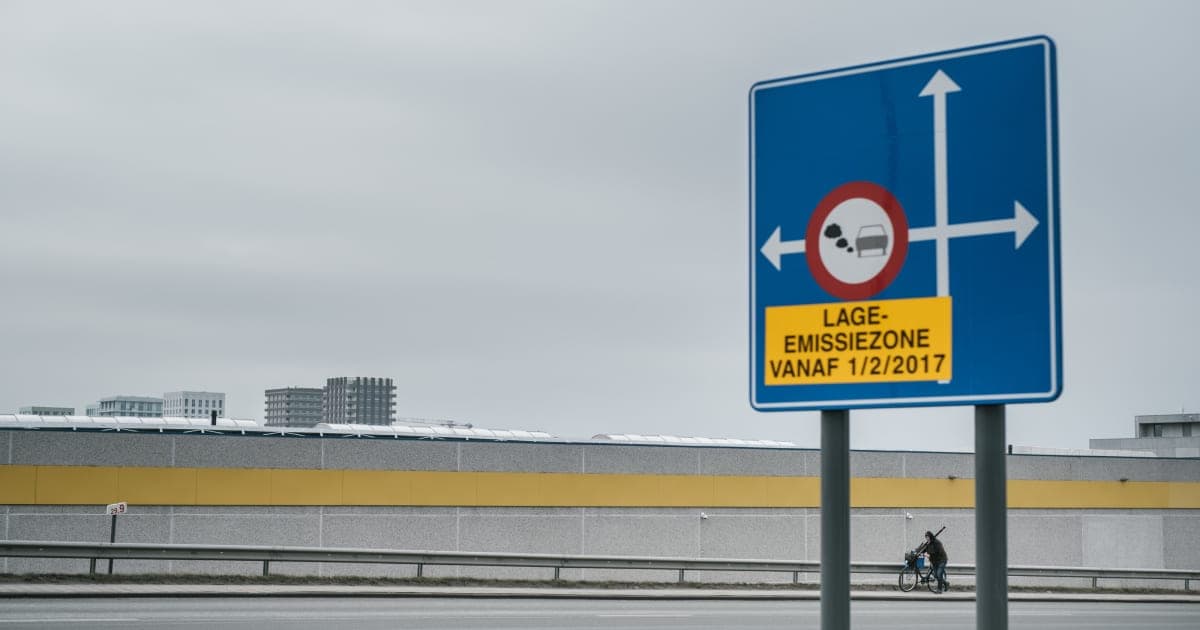
Antwerp checks show LEZ fines and tax arrears are now part of everyday city enforcement
A control action in Antwerpen has put two practical risks back in view for Belgium-based drivers: low-emission-zone compliance and unpaid public debts. According to a Dutch-language report by Het Nieuwsblad, inspectors issued LEZ fines and recovered 11,000 euro in overdue taxes during the action. The case is local, but the lesson is wider for residents, expats, EU staff and cross-border motorists: entering Antwerp by car is not only a traffic decision. It can trigger environmental checks, number-plate controls and, for some drivers, immediate financial settlement. Antwerp’s LEZ sits inside Flemish rules, while the broader policy logic is European: cities are using access restrictions to reduce harmful urban air pollution.
Trust & Evidence📚 4 sources· ✓ Editor reviewed· 🧠 AI-checked· Trust status: not yet independently verifiedView evidence & verification Hide
Verification record
- 📚 4 verified sources — Het Nieuwsblad · Vlaanderen.be · Vlaamse Milieumaatschappij · Urban Access Regulations in Europe
- 🧠 High confidence — AI-checked, editor-approved
- 🇧🇪 Belgian impact: High
- 📜 Provenance recorded & timestamped
Evidence is generated from the OIS evidence chain and reviewed before appearing on Belgium Pulse.
Powered by OIS / Evidentia
About this story
The subject is Antwerp’s low-emission zone and linked roadside enforcement. The named stakeholders are the City of Antwerp, Antwerp local police and inspection services, the Flemish Government, the Vlaamse Milieumaatschappij, drivers using Belgian and foreign-registered vehicles, local businesses, commuters and visitors. Vlaanderen.be says Antwerp and Ghent are currently the Flemish cities with LEZ systems, while VMM explains that access depends mainly on fuel type and Euro emission standard. The latest reported Antwerp check combined LEZ enforcement with recovery of unpaid taxes, showing how mobility controls can also become a broader public-revenue tool.
How to read this story
The history
Antwerp introduced its LEZ as part of a wider European urban policy shift: older, more polluting vehicles are restricted to improve air quality in dense city centres. The Flemish framework gives cities room to set local paid-access rules. In late 2025, the Flemish Government decided to withdraw planned LEZ tightening from 1 January 2026, leaving current access conditions in place until a later evaluation, with VMM indicating the first review is expected in 2027.
Regional impact
In Flanders, the immediate impact is strongest in Antwerpen and Gent, the two cities where Flemish LEZ rules are currently active. Antwerp drivers, suburban commuters, port-linked visitors, delivery firms and occasional tourists are the most exposed groups.
Local impact
For Antwerpen residents, the check reinforces that the LEZ is a live enforcement system, not a background rule. For visitors, the practical question is simple: check access before driving into the city, especially with a foreign plate or an older diesel vehicle.
International angle
The international angle is mainly practical. Belgium is one of many European countries where urban access rules vary by city. Foreign drivers entering Antwerpen cannot assume that compliance in another EU city automatically covers Flemish registration duties.
What this means for you
Before entering Antwerpen, check the vehicle on the official Antwerp LEZ platform, confirm whether registration is needed, buy a day pass if eligible and necessary, keep proof of exemption or registration, and settle known Belgian tax debts before a roadside check turns them into an immediate problem.
Opposing perspectives
- Antwerp and Flemish public-health enforcement view
The city-enforcement framing treats LEZ checks as routine protection of urban air quality and fair rule application. VMM describes a LEZ as an area where vehicles that emit too many harmful substances are barred or admitted only under conditions, and says camera-based checks avoid a sticker system that would be more fraud-prone. In this view, the reported LEZ-boetes and recovery of overdue taxes are not exceptional punishment but ordinary compliance work.
- Drivers, small firms and foreign-vehicle users view
Motorists who rarely enter Antwerpen, small delivery operators and foreign-registered drivers face the rules differently. Their concern is not only the fine but the administrative trap: a car may be clean enough, exempt, or eligible for paid access, yet still require registration. VMM’s own wording that foreign vehicles must register by the day after entry is the practical pain point. For this group, enforcement feels less like climate policy and more like a paperwork risk attached to city access.
- Flemish Government policy-balancing view
The Flemish Government’s withdrawal of planned LEZ tightening from 1 January 2026 points to a more cautious political framing than many European clean-air campaigns use. The current rules remain, but further tightening is no longer automatic. That puts Antwerp enforcement in a middle position: the city can still fine non-compliant vehicles, while Flanders reassesses how quickly access rules should become stricter.
Related to this story
Pulse Insight — This topic connects to 10 associations, 3 funding programmes, 127 upcoming events and 4441 jobs through the Flanders ecosystem.
Live connections from the Belgium Impulse ecosystem — not recommendations.
This briefing was prepared with AI assistance and reviewed by a Belgium Impulse editor before publication. methodology.