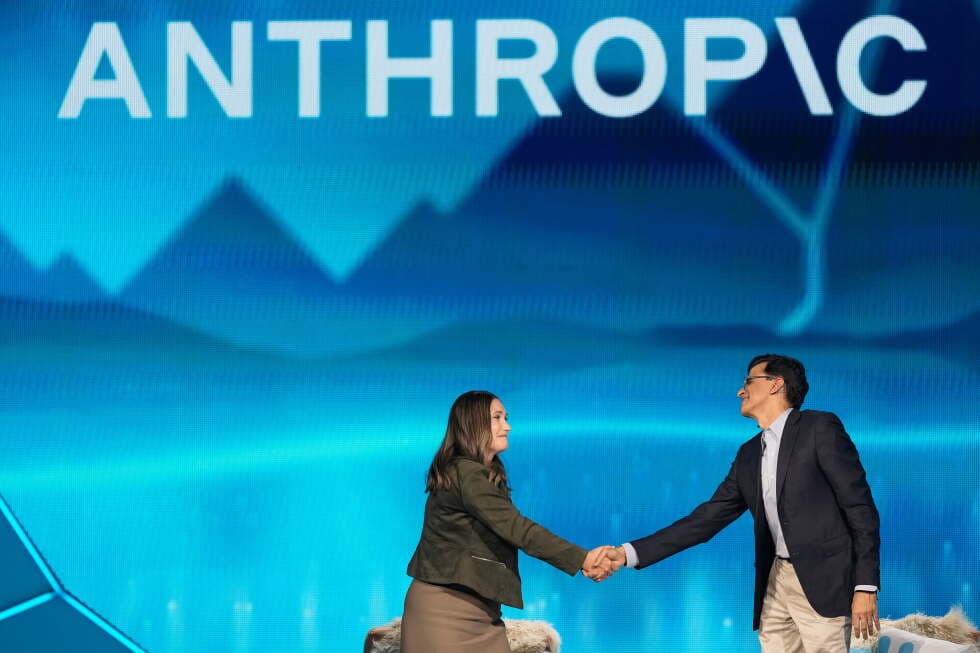
Anthropic shuts Fable and Mythos after U.S. foreign-access order
Anthropic said it took its newest Fable 5 and Mythos 5 artificial-intelligence models offline after receiving a U.S. government directive intended to prevent access by foreign nationals. The company said the order arrived on Friday afternoon, did not specify the national-security concern, and forced it to suspend access broadly while it works to restore service. The company disputes the handling of the case, arguing that any block on unsafe deployments should happen through a transparent, technical and statutory process. The immediate centre of gravity is U.S. national-security control over frontier AI, but the European relevance is direct: the EU AI Act gives the European Commission and its Brussels-based AI Office authority over general-purpose AI models placed on the EU market, including systemic-risk duties for the most capable systems. The case shows how export controls, cybersecurity fears and AI governance are converging faster than regulators expected.
Evidenced on the trust ledger·📚 7 sources·🧠 AI-checked·🇧🇪 Belgian: MediumWhy you can trust this
About this story
Anthropic (San Francisco AI company founded in 2021 by former OpenAI staff) develops the Claude family of AI assistants. Fable 5 (Anthropic's newly released general-use model) is described by the company as a more public version of the more restricted Mythos line. Mythos 5 (Anthropic's more tightly controlled advanced model) is linked in reporting to cybersecurity-capable frontier AI. Claude (Anthropic's AI assistant product family) is the customer-facing brand through which many users access its models. The U.S. Commerce Department (U.S. federal department overseeing export controls through the Bureau of Industry and Security) is the policy actor reportedly behind the licensing restriction. Dario Amodei (Anthropic co-founder and chief executive) is the company's public-facing leader. The EU AI Act (Regulation (EU) 2024/1689, in force since 2024) is the EU's binding AI rulebook. The European AI Office (European Commission unit in Brussels) supervises general-purpose AI model obligations at EU level.
How to read this story
The history
The precedent is not a normal app outage but the long U.S. shift toward treating advanced computing as a strategic asset. The U.S. Commerce Department expanded semiconductor export controls in 2022 and 2023 to restrict China's access to advanced AI chips, while later debates moved from chips toward model weights, cloud access and frontier-model testing. In Europe, the AI Act entered into force in 2024 and created a separate route: market-access rules, transparency duties and systemic-risk obligations for general-purpose AI models. The Anthropic case is a sharper form of the same trend, applying security logic directly to model access.
The geopolitics
The case fits the broader strategic competition over advanced AI, cybersecurity and compute. The United States has already used export controls to shape access to advanced chips; applying similar logic to model access would move the contest closer to software capability itself. Europe sits between dependency on U.S. AI providers and its ambition to regulate high-risk technologies on its own terms.
Why now
The immediate trigger is Anthropic's statement that it received a U.S. directive on Friday afternoon and then disabled access to Fable 5 and Mythos 5. The timing follows the release of Fable 5 and reported U.S. concern about whether safeguards could be bypassed.
What to watch
Watch for a public Commerce Department notice, licence guidance, or a narrowed order that lets Anthropic restore access. In Europe, the useful signal will be whether the European Commission or AI Office treats the shutdown as relevant to AI Act implementation, systemic-risk supervision or provider transparency duties.
Local impact
The most local Belgian effect is in Brussels' EU-policy and technology ecosystem: Commission officials, AI Act specialists, consultancies and companies advising on compliance now have a live example of a U.S. model-access decision colliding with European market expectations. Belgian AI users are affected mainly through procurement and continuity planning, not through a Belgian legal order.
International angle
The cross-border issue is that U.S.-based AI providers serve European users through cloud access, while Washington can still treat their most advanced models as export-controlled technology. The EU has its own AI Act, but that framework does not stop a U.S. company from suspending a model globally to comply with a U.S. directive.
What this means for you
Belgian and EU users should assume that frontier-model access can change quickly for legal or geopolitical reasons. Teams using Anthropic models for production workflows should check fallback providers, review contract terms on service interruption, avoid single-model dependency in critical processes, and document how any model change affects AI Act compliance where regulated systems are involved.
What happens next
Anthropic says it is working to restore access, but any reopening may depend on whether U.S. authorities issue licences, narrow the directive or accept technical safeguards. The next procedural signals are a public Commerce Department explanation, any Anthropic update to customers, and whether EU regulators ask how the shutdown affects model availability and compliance for European users.
Potential consequences
The shutdown could accelerate enterprise due diligence around AI-provider dependency, especially where teams use frontier models for coding, vulnerability discovery or research. It could also increase pressure on EU policymakers to clarify how the AI Act handles models that are technically offered in Europe but can be withdrawn under a third country's security order. Competitors may benefit commercially, but they may also face similar scrutiny if their models show comparable capabilities.
Opposing perspectives
- Anthropic
Anthropic argues that governments should be able to stop unsafe deployments, but only through a clear statutory process grounded in technical evidence. The company's statement frames the order as overbroad because it disables access for customers even though Anthropic says the alleged vulnerability is limited and remediable.
- U.S. national-security officials
The U.S. national-security frame treats the most capable AI models as strategic assets comparable to advanced chips. Under that view, a temporary access block is justified if a frontier model could help adversaries find cyber vulnerabilities or bypass safeguards faster than defensive institutions can adapt.
- EU AI-governance institutions
The EU regulatory frame is less about nationality-based access and more about market supervision. The AI Act requires transparency, risk assessment, adversarial testing and incident reporting for general-purpose AI models with systemic risk, suggesting a procedure-led alternative to abrupt export-control intervention.
Timeline
- 2024-07-12·The EU AI Act was published in the Official Journal of the European Union.
- 2024-08-01·The EU AI Act entered into force.
- 2026-06-13·Anthropic said it had taken Fable 5 and Mythos 5 offline after receiving a U.S. directive.
Glossary
- General-purpose AI model
- An AI model that can perform a wide range of tasks and can be integrated into many downstream systems.
- Systemic risk
- Under the EU AI Act, a risk linked to very capable or widely used general-purpose AI models that could have significant effects at Union level.
- Export controls
- Legal restrictions on transferring strategic goods, technology or services to certain countries, entities or persons.
- AI Office
- The European Commission unit responsible for EU-level implementation and enforcement of general-purpose AI model rules under the AI Act.
Related to this story

Live connections from the Belgium Impulse ecosystem — not recommendations.
This briefing was prepared with AI assistance and reviewed by a Belgium Impulse editor before publication. methodology.