EconomíaValonia
Financiamiento del transporte público

¿Por qué ha criticado duramente el Tribunal de Cuentas belga la financiación del tranvía de Lieja?

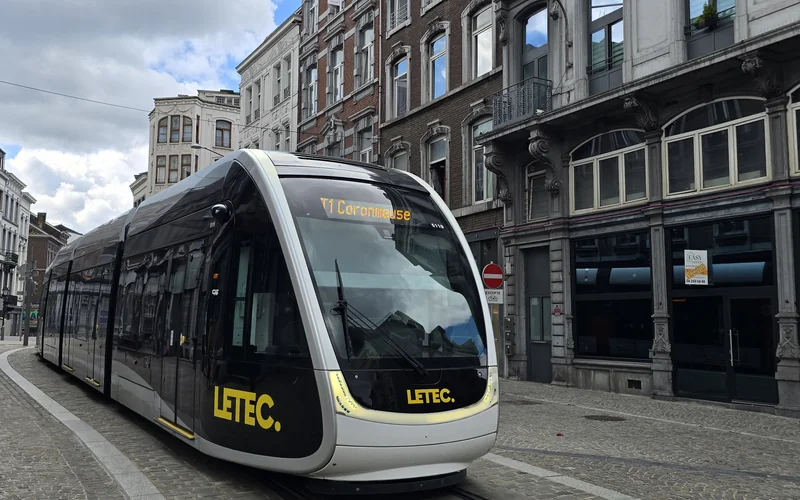
El Tribunal de Cuentas de Bélgica ha criticado duramente la gestión financiera del proyecto de tranvía de Liège, cuya asignación presupuestaria dedicada a Valonia alcanza los 40,015 millones de euros en 2026, frente a los 30,7 millones de euros de pagos de los…
Belgium Impulse Editorial·3 September 2026·6 min read·
Bien establecido· 1 fuente primaria + 4 documentos oficiales + 2 fuentes periodísticas independientes · Fuentes de contexto: 1

En 30 segundos

  • Wallonia asignó 40,015 millones de euros en 2026 para la tarifa del tranvía, el saldo de mediación, las obras fuera de configuración y algunos gastos prioritarios de los autobuses.
  • OTW había presupuestado 30,7 millones de euros para pagos a TramArdent en 2025, que comenzarían una vez que el tranvía entrara en servicio.
  • En el anuncio de financiación de 2019, se evaluó la construcción y mantenimiento en el marco del PPP en unos 430 millones de euros hasta enero de 2050.
  • El Banco Europeo de Inversiones proporcionó el 50% de los préstamos a largo plazo anunciados en el cierre financiero.

Belgium’s Court of Audit sharply criticised the financing of the Liège tram project in a report publicised on 3 September 2026, renewing scrutiny of a public-private partnership for which Wallonia has allocated €40.015 million this year. That is roughly €9.3 million more than the €30.7 million that the Opérateur de Transport de Wallonie, or OTW, had budgeted for payments to the private consortium Tram’Ardent in 2025, although the two figures do not cover exactly the same basket of costs. According to reporting by La Dernière Heure and 7sur7, the audit is particularly severe about the way the project’s financing was organised and monitored.

The criticism matters because the tram is no longer merely a construction project. It became an operating public service in April 2025, meaning the financial model has moved into its long repayment and maintenance phase. Wallonia’s 2026 budget documents say the €40.015 million credit principally covers the fee due under the public-private partnership, the balance of a mediation settlement and works outside the original project configuration. A smaller part supports studies and works for priority bus routes chosen after the regional government abandoned the tram’s short extensions in 2024.

That mixture of annual availability payments, settlement costs and supplementary works makes the true bill harder for a non-specialist reader to follow. It also explains the Court of Audit’s importance: the institution examines whether public money is authorised, recorded and reported in a way that allows the Walloon Parliament to exercise meaningful control. The published news accounts characterise its conclusions as damning, but the material available at publication does not establish one definitive, all-inclusive lifetime cost calculated on a single basis. Construction expenditure, financing charges, maintenance, compensation and associated public works should therefore not be casually added together.

At the centre of the arrangement is Tram’Ardent, the private project company responsible under a design-build-finance-maintain contract for delivering and maintaining the line. The consortium brought together industrial and financial partners including Colas and Spanish rolling-stock manufacturer CAF. The European Investment Bank supplied half of the long-term lending announced at financial close, alongside lenders including Belfius, BBVA and Natixis. OTW, the public operator trading under the TEC brand, runs the service and pays the contractual fee, with Wallonia ultimately backing the obligation.

When the financing was announced in January 2019, TEC described construction and maintenance under the contract as costing about €430 million through January 2050. The model was intended to transfer construction and availability risks to the private partner: payments would start only when the infrastructure entered service, and deductions could apply if the system was unavailable or defective. In theory, that aligns the contractor’s incentives with timely delivery and reliable performance. In practice, the line arrived years later than initially envisaged, following redesign, the pandemic, disputes and mediation between the public and private parties.

The broader economic lesson is not that every public-private partnership is inherently poor value. It is that deferred payment can obscure the trade-off between short-term budget relief and long-term rigidity. A PPP can bring private financing and specialised project management, but the public authority still needs the technical and legal capacity to challenge cost changes, document risk transfers and compare the final arrangement with conventional public procurement. If those controls are weak, an annual fee can resemble a manageable operating expense while binding future governments for decades.

There is also a European accounting history behind the dispute. Eurostat twice challenged an earlier financing structure in 2015 because the allocation of risk did not justify keeping the investment outside the public accounts. The project was subsequently reworked. The European Investment Bank then supported the revised financing under the Juncker Plan, while a Walloon decree provided a regional guarantee for the amounts owed by OTW. Those interventions did not remove the underlying public exposure; they determined how the risks and payments were structured and recorded.

For Liège households and businesses, the immediate issue is not a new tram surcharge. The cost is borne through Wallonia’s transport budget, where it competes with bus services, fleet renewal, school transport and other infrastructure. A fixed contractual payment must be honoured before policymakers decide how much discretionary money remains. If financing or supplementary works cost more than expected, the practical consequences can appear elsewhere: postponed investment, pressure on the wider TEC offer or additional demands on regional revenue. Conversely, a dependable tram can shorten journeys, improve access to the city centre and support shops and employers after years of disruptive construction.

The political perspectives therefore diverge without being mutually exclusive. The Court of Audit and parliamentarians concerned with budget control can reasonably demand a complete, comparable account of commitments and stronger documentation of decisions. OTW and the Walloon government can point to the fact that a complex infrastructure asset is now carrying passengers and that a DBFM contract includes decades of maintenance rather than construction alone. Businesses and passengers are likely to judge the project less by accounting architecture than by punctuality, connections and whether the reorganised bus network works.

The next test is the official response. Walloon ministers and OTW will need to explain which recommendations they accept, whether reporting to Parliament will change and how annual tram obligations fit into the operator’s wider funding settlement. Passenger numbers, service reliability, contractual deductions and the cost of remaining works will show whether the operating benefits justify the locked-in expenditure. Until the authorities publish a reconciled figure separating the base contract, finance, maintenance, settlements and ancillary works, claims about one definitive total should be treated cautiously.

Context & what happens next

Impact

Regional — La cuestión es directamente valona: los contribuyentes regionales financian las obligaciones, la OTW opera el servicio y los residentes y empresas de Lieja dependen del tranvía y de su red de autobuses de conexión.

Fuentes y pruebas
Bien establecido · 1 fuente primaria + 4 documentos oficiales + 2 fuentes periodísticas independientes · Fuentes de contexto: 1
Explorar las pruebas
Walloon Government — 2026 expenditure budget
Fecha de publicación no disponible
Consultado por ODIN:
3 Sept 2026
Leer el original
Belgian Court of Audit — Walloon budgets 2024 adjustment and 2025 initial budget
Fecha de publicación no disponible
Consultado por ODIN:
3 Sept 2026
Leer el original
RTBF — Liège tram enters passenger service
Publicado:
28 Apr 2025, 02:00
Consultado por ODIN:
3 Sept 2026
Leer el original
TEC — financing announcement for the Liège tram
Publicado:
31 Jan 2019, 01:00
Consultado por ODIN:
3 Sept 2026
Leer el original
Walloon Government — 2026 public-transport financing
Publicado:
12 Feb 2026, 01:00
Consultado por ODIN:
3 Sept 2026
Leer el original
Walloon Mobility Administration — OTW public-service contract 2024-2028
Publicado:
13 Dec 2023, 01:00
Consultado por ODIN:
3 Sept 2026
Leer el original

Seguir leyendo

Con la tecnología de ODIN™Una creación de Ordinis · © 2026 Ordinis

Este artículo se elaboró a partir de pruebas verificadas, registrando sus fuentes y su razonamiento a medida que se escribía.

metodología.