What everyone gets wrong about Belgium’s festival summer
Belgium’s summer is often told through the glamour of the big ticketed names. The evidence points to a stranger, more revealing split: the most exclusive weekends and the most open civic party are thriving at once.
What OIS adds: facts mapped to named sources, reviewed for balance, and independently verifiable — not an AI take.
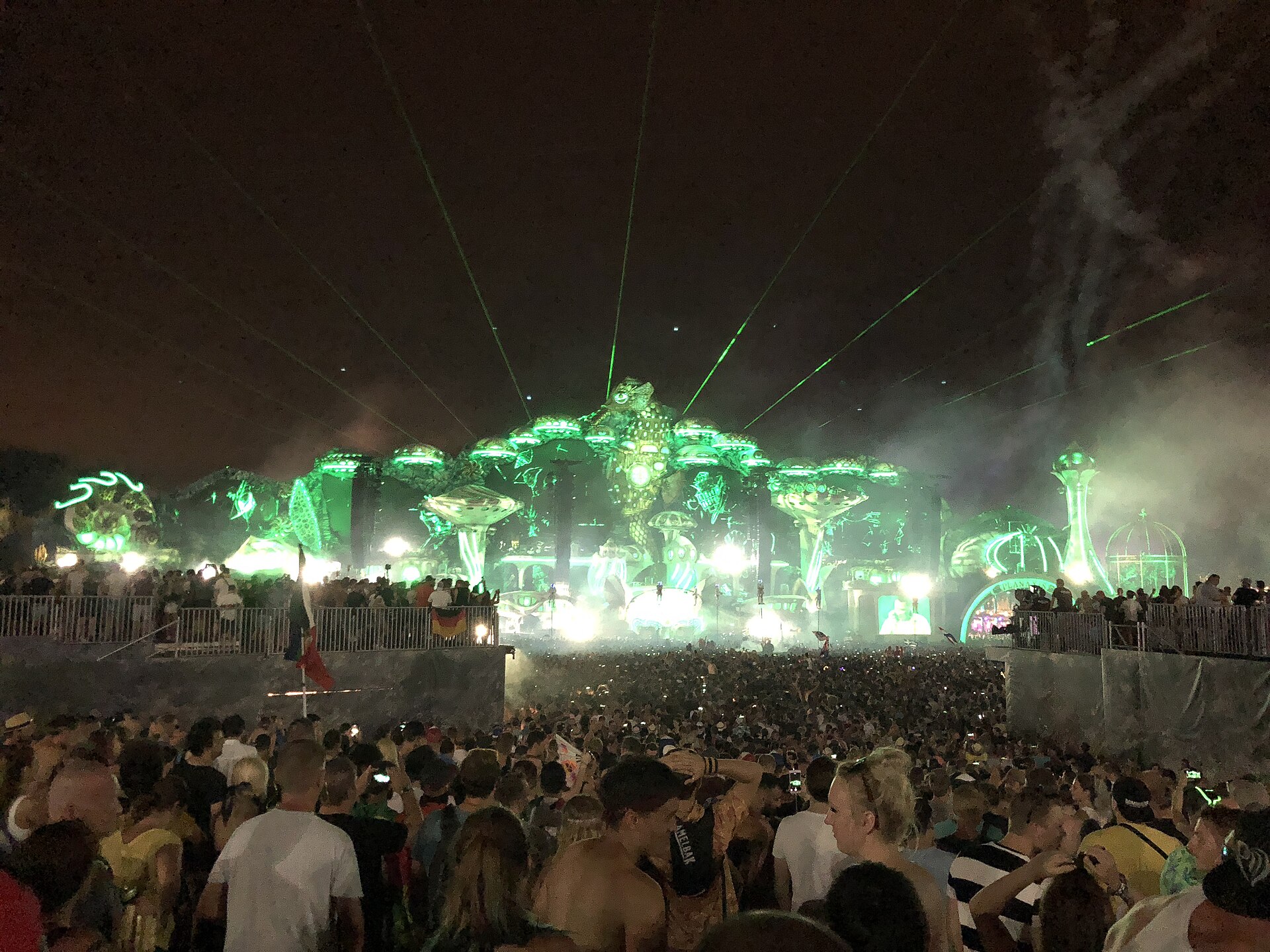
Belgium’s festival summer is splitting in two: a premium ticketed circuit that can still sell out above €400, and a free civic tradition that may now carry the broader cultural weight.
In the third week of July 2026, two Belgian festival crowds overlap: one paid upward of €400 to get into ; the other walked into Ghent’s Gentse Feesten for free. That is the Belgian summer in miniature: not one festival season, but two running shoulder to shoulder, with very different ideas of who gets to belong.
The common picture is simple enough: Belgium means the great ticketed names, the thunder and spectacle of Tomorrowland, and . But that picture is only half-lit.
The paid circuit has become genuinely expensive. A Tomorrowland weekend starts around €327, or €410 with camping, and still sells out; Rock Werchter weekend passes run €260–€330. Once inside, the costs continue in festival currencies — Tomorrowland’s Pearls, Werchter’s Coins — where a beer sits near €3.50 and a meal climbs far higher.
And yet the biggest gathering of the summer is not behind a premium wristband. Gentse Feesten, paid for by Ghent’s city council as a civic celebration, rests on the principle that culture belongs to everyone. It is not costless: the city carries the pressure of crowds, security and the slow creep of commercial stands. But its existence changes the question. If the expensive festivals still fill, demand is not the puzzle. Access is.
What most people assume
The prevailing belief is not foolish. The big names are loud in every sense: international, photogenic, choreographed, easy to recognise from Belgium, , and alike. They look like the country’s festival identity because they are built to travel.
There is a real case for them, too. Tomorrowland is a global cultural export and a tourism draw; the scale of the major festivals pays for stages, safety and logistics that smaller events cannot match. The premium summer is not an illusion. It is a powerful part of the story.
But when price becomes the main measure of importance, the public side of festival culture slips out of view. A free event can look less glamorous because it has no golden gate. That does not make it smaller in meaning.
“For a few weeks, small towns like Boom and Dour become global destinations.”
What the evidence actually says
The corrective evidence sits in Ghent. Gentse Feesten draws some 1.6 million visitors over ten days, making it the biggest gathering of the summer in Flanders.
Its scale is not only in bodies on the street. Around 3,500 events are free to attend, turning the city itself into the venue: squares, corners, stages, pavements, the ordinary fabric of urban life briefly tuned to music and movement.
That matters because it reverses the usual hierarchy. The most visible festival is not necessarily the most socially important one. The biggest shared cultural moment may be the one without a ticket barrier.
Why the misunderstanding sticks
The wrong view endures because paid festivals are easier to see from a distance. A price creates a threshold; a wristband creates a tribe; a branded currency makes the whole world inside the gate feel separate and complete.
Free civic culture is more porous. It spills into streets, mixes audiences, and is harder to package as a single spectacle. It can seem ordinary precisely because it is open.
The calendar makes the misunderstanding sharper. Gentse Feesten runs from 17–26 July, overlapping Tomorrowland’s weekends and Dour almost exactly. The same stretch of summer holds both the premium ritual and the public one, which means Belgium is not choosing between them. It is revealing two versions of cultural life at once.
How to see it correctly
The more accurate framing changes what should be valued. The paid circuit shows Belgium’s ability to stage world-class events. The free tradition shows something quieter but just as important: a city can make culture feel like common ground rather than a purchase.
For readers, the point is practical as well as poetic. Festival prices tell you who can enter a field for a weekend. Civic festivals tell you what a municipality — a local authority such as Ghent, led by its city council rather than a national or regional government — chooses to keep open for everyone.
That does not make the free model effortless. When the city pays, the pressures do not disappear; they move into public budgets, public space and public management. But that is exactly why the distinction matters. A free festival is not free because it costs nothing. It is free because a civic choice has been made.
What to watch
The reframe holds if the open, city-wide festival keeps carrying the broadest public gathering while the premium circuit remains full; it weakens if access no longer maps so clearly onto two different festival worlds.
What to take away
Belgium’s summer is not simply getting more expensive; it is dividing into spectacle you buy and culture you can still walk into.
Belgium’s festival summer has never been bigger. The real question is no longer how many festivals there are, but whether the summer is becoming two summers — one you pay several hundred euros to enter, and one that is still, defiantly, free.
- Tomorrowland 2026 ticket & food prices — festivalviewer
- Rock Werchter 2026 tickets — Rock Werchter
- Gentse Feesten drew almost 1.6 million visitors — Belga
- Best festivals in Belgium — 2026 guide — TicketSwap