
 What's On
 Expat
BRUSSELS BUSINESS · Reporting
Savonneries bruxelloises invests in Laeken expansion after long permit wait
The century-old soapmaker has spent nearly one million euros on a larger site, but its co-director says permits and red tape dragged the project out for two and a half years.
Published: · Content updated:
Based on: La Libre Belgique
Saved articles and followed stories stay in this browser. No account sync or notifications.
In 30 seconds
Laeken soapmaker Savonneries bruxelloises has invested nearly one million euros to expand capacity, but its co-director says permits and red tape dragged the project out for two and a half years.
- The expansion aims to raise production from 500 to 750 tonnes, according to La Libre Belgique.
- In 2023 the company had to turn down production of more than one and a half million soaps because it lacked capacity.
- The company has grown from 7 staff to around fifteen, and turnover went from just under 2 million in 2019 to nearly 4 million in 2025.
- The firm does not work with large retailers and refuses very cheap orders, such as a request for a soap at 17 cents, de Villenfagne says.
Sources: La Libre Belgique
What it means
What happens next
The new hall should open during January and will group 3 recipe preparation lines, while finishing lines will be reinstalled in the original building, rising to 4 in 2027 or 2028, with a packaging area at the back. The goal is to reach 750 tonnes of output. The report does not say how the investment was financed or how many jobs the expansion may add.
Sources: La Libre Belgique
Context
Background
Soap production in Laeken began in 1926, when industrialist Emile Collin and perfumer Alexis Huylenbroeck set up in what was then an industrial district full of factories. The Nanson family took over next, followed in 1993 by Vincent Laurencin and François Van de Velde. When they wanted to retire, they looked for successors able to keep the craft going in the heart of Brussels. Maxime de Villenfagne and Maxime Pecsteen, both formerly at Deloitte, took over on 16 December 2019. Three months later Covid struck: clients cancelled orders and the two experienced salespeople had to stay home as at-risk persons, so the new owners worked on production themselves. According to de Villenfagne, activity had picked up again within six months.
Sources: La Libre Belgique
The wider picture
Laeken is a residential suburb in the north-west of the Brussels-Capital Region, part of the City of Brussels and a separate municipality until 1921. A century ago it was an industrial area with many factories. According to de Villenfagne, other soap workshops in Brussels are smaller, and in highly customised solid cosmetics the company is unique in Belgium. Its export trade is led by France, Austria and Greece, with Asian markets such as Japan, Korea and Taiwan also keen buyers. Most clients are met once a year at the Cosmoprof fair in Bologna.
Sources: La Libre Belgique · Wikipedia: Laeken (Background reference)
Why now
The new space is due to become operational during January, after a permit process that de Villenfagne says took two and a half years. The story also comes in the company's centenary year: at the end of September the King visited the workshop, which holds the title of supplier to the Court.
Sources: La Libre Belgique
How we got here
Emile Collin and Alexis Huylenbroeck start producing soap in Laeken.
Vincent Laurencin and François Van de Velde take over after the Nanson family.
Maxime de Villenfagne and Maxime Pecsteen take over the Savonneries bruxelloises.
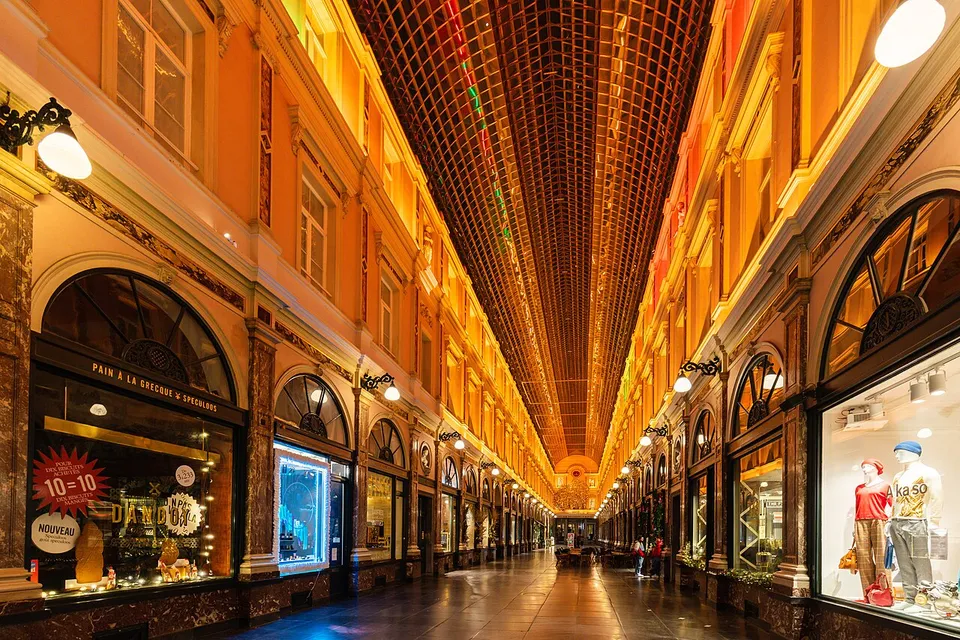
A brand shop opens in the Galeries royales Saint-Hubert in Brussels.
After turning down orders for lack of capacity, the owners buy the adjoining warehouse at the end of the year.
Turnover reaches nearly 4 million.
Sources: La Libre Belgique
Reporting
Nearly one million euros invested
The Savonneries bruxelloises, a soap workshop in Laeken, has invested nearly one million euros in expanding its site, managing director Maxime de Villenfagne told La Libre Belgique. According to the newspaper, the company bought the adjoining warehouse at the end of 2023, after having to turn down production that year because it lacked capacity. The new space, fitted with a green roof and solar panels, is expected to become operational during January. De Villenfagne regretted, however, that permit applications and administrative burdens had stretched the project over two and a half years, a drawback he linked to doing business in Brussels.
Reporting
More capacity for contract work
The expansion is meant to lift output substantially. According to La Libre Belgique, 3 recipe preparation lines will be grouped in a new 320 m2 hall, while the finishing lines that press the soaps will be reorganised in the original building, with a packaging area at the back. The stated aim is to raise production from 500 to 750 tonnes. Most of that volume is made for other companies: contract manufacturing for business clients accounts for 90% of turnover, with only 10% sold under the Savonneries bruxelloises brand, partly through a shop opened in 2021 in the Galeries royales Saint-Hubert. The complaint about administrative delays comes from a firm that describes itself as unique in Belgium for highly customised solid cosmetics.
Key line
Maxime de Villenfagne said permit applications and administrative burdens meant the project took two and a half years.
Reporting
A century of soapmaking
The workshop has been producing soap in Laeken for 100 years. La Libre Belgique recounts that industrialist Emile Collin and perfumer Alexis Huylenbroeck started production there in 1926, when the area was full of factories. The Nanson family later ran the business, followed in 1993 by Vincent Laurencin and François Van de Velde, who wanted successors able to keep the craft in Brussels. Maxime de Villenfagne and Maxime Pecsteen, both former Deloitte employees, took over on 16 December 2019. Three months later the Covid crisis brought cancelled orders and forced the pair to work on the production floor themselves; activity had recovered within six months, de Villenfagne said. At the end of September, marking the centenary, the company, a supplier to the Court, received a visit from the King.
Reporting
Growth driven by solid cosmetics
Growth has come mainly from innovation, according to de Villenfagne. The paper reports that the workforce rose from 7 to around fifteen people and that turnover, just under 2 million in 2019, reached nearly 4 million in 2025. He attributed this to solid cosmetics such as shampoo bars and soaps for the face, body and shaving, made with plant-based surfactants that are gentler in pH than a classic soap base. The company exports to 27 countries, led by France, Austria and Greece, and has just signed a contract for Bermuda. It still relies on fully mechanical machines that an in-house technician can repair, and turns down very low-price orders.
Reporting
Opening in January
The new space is due to open in January, and the number of finishing lines is set to reach 4 in 2027 or 2028, according to La Libre Belgique. Client recipe cards, once kept on paper, have also been digitised into a management system, with de Villenfagne saying he wants to modernise the century-old firm for the next hundred years. The report does not say how the investment was financed or how many jobs the larger site might create.
Understanding the story
What the main actors are doing
Reported positions, summarised — not direct quotations
Maxime Pecsteen
De Villenfagne's business partner and co-owner since December 2019. Also formerly at Deloitte, he previously developed a brewery in Tokyo and bars in Paris for Brussels Beer Projet.
Sources: La Libre Belgique
Vincent Laurencin and François Van de Velde
Owners from 1993 who, when preparing to retire, sought buyers able to keep the soapmaking know-how in central Brussels for many years.
Sources: La Libre Belgique
Key terms
- Solid cosmetics
- Solid cosmetics: products such as shampoo bars and soaps for the face, body and shaving. The company says it uses plant-based surfactants with a lower pH than the soap base used in early solid cosmetics.
- Supplier to the Court
- Supplier to the Court: a title held by the Savonneries bruxelloises; according to de Villenfagne, its effect is felt mainly in international business.
Sources: La Libre Belgique
People, places and institutions
- Savonneries bruxelloisesCentury-old soap and solid-cosmetics workshop in Laeken that is expanding its site.
- LaekenResidential area of the City of Brussels where the workshop has operated since 1926.
- Maxime de VillenfagneCo-managing director and co-owner since 2019.
- Maxime PecsteenCo-owner of the company alongside de Villenfagne.
- Galeries royales Saint-HubertBrussels shopping arcade where the company opened its brand shop in 2021.
- CosmoprofInternational trade fair in Bologna where the company meets most of its clients once a year.
Sources: La Libre Belgique · Wikipedia: Laeken (Background reference)
Some background items were left out because automated checks could not verify them against the sources.
Video report
Sources and factual attribution (1)
- "C'est très chouette de vouloir entreprendre à Bruxelles mais avec les lourdeurs administratives, tout cela a pris 2,5 ans…" — La Libre Belgique
Dated report by La Libre Belgique used for the facts attributed to it.
Source publication date: . Consulted: .
Supports
The Savonneries bruxelloises in Laeken invested nearly one million euros in expanding the site, with the new space due to become operational in January.
La Libre Belgique: "C'est très chouette de vouloir entreprendre à Bruxelles mais avec les lourdeurs administratives, tout cela a pris 2,5 ans…"Maxime de Villenfagne said permit applications and administrative burdens meant the project took two and a half years.
La Libre Belgique: "C'est très chouette de vouloir entreprendre à Bruxelles mais avec les lourdeurs administratives, tout cela a pris 2,5 ans…"At the end of 2023 the company bought the adjoining warehouse after having had to refuse production that year for lack of capacity.
La Libre Belgique: "C'est très chouette de vouloir entreprendre à Bruxelles mais avec les lourdeurs administratives, tout cela a pris 2,5 ans…"A new 320 m2 hall will house 3 recipe preparation lines, finishing lines are set to number 4 in 2027 or 2028, and production is meant to rise from 500 to 750 tonnes.
La Libre Belgique: "C'est très chouette de vouloir entreprendre à Bruxelles mais avec les lourdeurs administratives, tout cela a pris 2,5 ans…"Contract manufacturing accounts for 90% of turnover and the own brand for 10%, sold partly in a shop opened in 2021 in the Galeries royales Saint-Hubert; the firm exports to 27 countries.
La Libre Belgique: "C'est très chouette de vouloir entreprendre à Bruxelles mais avec les lourdeurs administratives, tout cela a pris 2,5 ans…"Emile Collin and Alexis Huylenbroeck began making soap at the site in 1926; Maxime de Villenfagne and Maxime Pecsteen took over the company on 16 December 2019.
La Libre Belgique: "C'est très chouette de vouloir entreprendre à Bruxelles mais avec les lourdeurs administratives, tout cela a pris 2,5 ans…"Staff grew from 7 to around fifteen and turnover rose from just under 2 million in 2019 to nearly 4 million in 2025, mainly thanks to solid cosmetics.
La Libre Belgique: "C'est très chouette de vouloir entreprendre à Bruxelles mais avec les lourdeurs administratives, tout cela a pris 2,5 ans…"At the end of September, for its centenary, the company, a supplier to the Court, received a visit from the King.
La Libre Belgique: "C'est très chouette de vouloir entreprendre à Bruxelles mais avec les lourdeurs administratives, tout cela a pris 2,5 ans…"
How this article was prepared
Revisions and corrections
No corrections recorded.
- First version · 1 —
First publication.