
 What's On
 Expat
MINING HERITAGE · Reporting
Eisden's former coal mine reinvents itself as a Limburg tourist hub
Closed in 1987, the Eisden pit in Maasmechelen now draws visitors to an outlet centre, a national park and preserved mining heritage, VRT NWS reports.
Published: · Content updated:
Based on: VRT NWS
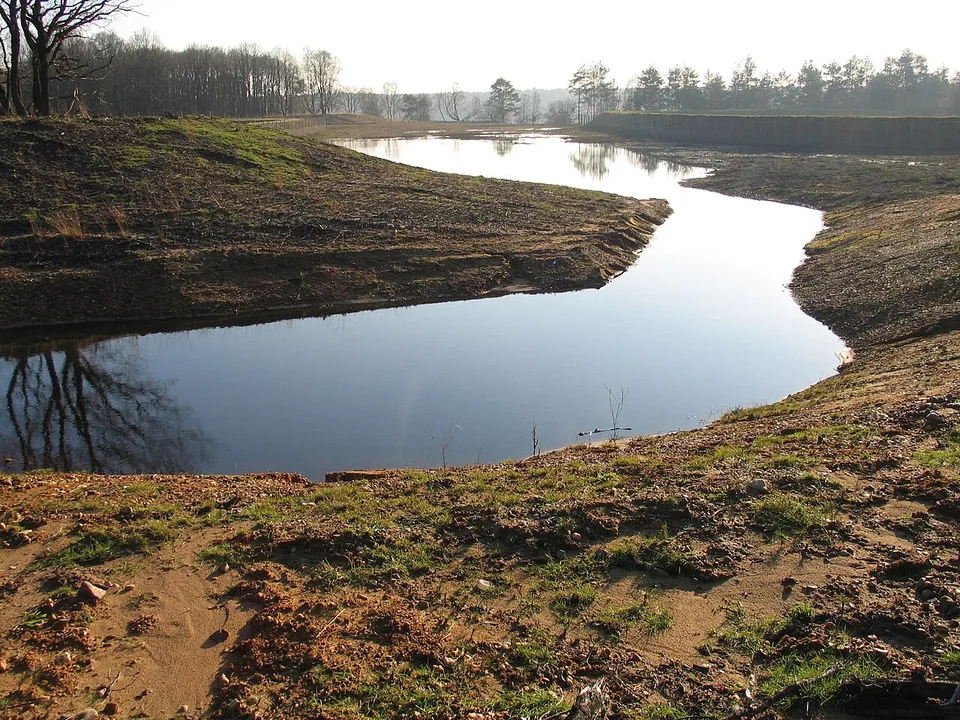
Saved articles and followed stories stay in this browser. No account sync or notifications.
In 30 seconds
Closed in 1987, the Eisden coal mine in Maasmechelen has become one of Limburg's main tourist hubs, a showcase of the nearly completed reconversion of the province's former mining sites.
- The Eisden mine closed for good on 18 September 1987 after producing close to 73.2 million tonnes of coal, according to VRT NWS.
- Only a few original buildings survive: one headframe beside a replica of the second, the old warehouses now housing the municipal academy, and the former management building, now a hotel.
- The Maasmechelen Village outlet centre was one of the first major reconversion projects after the Limburg mines closed; its Sunday opening was controversial at the time.
- The Terhills leisure domain, which includes part of the Hoge Kempen National Park, a holiday village, a hotel and water sports, is the municipality's tourist showcase.
Sources: VRT NWS
What it means
What happens next
VRT NWS says its series will next visit Winterslag, Beringen and Zolder. In Eisden, Maasmechelen is betting on green tourism, including a large gateway to the Hoge Kempen National Park, and mayor Raf Terwingen wants investment to continue, notably in a future event hall. No timetable or budget for these projects is given in the report.
Sources: VRT NWS
Context
Background
According to VRT NWS, coal was discovered beneath Limburg 125 years ago, giving rise to seven mines that attracted workers from across Europe and North Africa. The Eisden mining concession was granted in 1906 and merged with another concession in 1919; coal extraction began in 1923 and employment peaked in 1955. For thousands of families the mine meant work and financial security, but also hard and dangerous labour. When closure loomed, efforts to save the pit failed; Koen Albrechts of the Christian trade union says the unions then fought for a solid social agreement. In the 1980s, according to mayor Raf Terwingen, the aim was to demolish as many buildings as possible, because the mine was seen as a negative symbol of the region's industrial past.
Sources: VRT NWS
The wider picture
Eisden is one of seven former Limburg mines; VRT NWS reports that Zwartberg was the first to close and Zolder the last, in 1992, after which the sites were converted for cultural, economic and tourist uses. Mayor Raf Terwingen praises the LRM for giving the sites a wide variety of purposes rather than the same one. Limburg is the easternmost of the five Dutch-speaking provinces of Flanders, and the Hoge Kempen National Park, to which Terhills is a gateway, is the first national park in Flanders. Because of its mining history, many Maasmechelen residents have Dutch, German, Polish or Mediterranean roots.
Sources: VRT NWS · Wikipedia: Maasmechelen (Background reference) · Wikipedia: Hoge Kempen National Park (Background reference) · Wikipedia: Limburg (Belgium) (Background reference)
Why now
The report is part of a VRT NWS weekend series on Limburg's former mining sites, published as the long reconversion nears completion. Eisden follows Zwartberg, Houthalen and Waterschei in the series.
Sources: VRT NWS
How we got here
The Eisden mining concession is granted.
The Eisden concession is merged with another concession.
Coal extraction begins at Eisden.
Two Eisden miners go on pilgrimage to Lourdes, leading to the creation of a stretcher-bearers section in Eisden.
Employment at the Eisden mine reaches its highest level.
The Eisden mine closes for good.
Zolder, the last Limburg mine, ceases operations.
Sources: VRT NWS
Reporting
From coal to visitors
The former coal mine at Eisden, in the Limburg municipality of Maasmechelen, has become one of the province's leading tourist destinations, VRT NWS reported in a feature on the conversion of Limburg's old mining sites. Where thousands of miners once went underground, visitors now come to walk in nature, shop at the Maasmechelen Village outlet centre or cycle between the old spoil heaps. Only a handful of original buildings survived: one headframe standing next to a replica of the second, the old warehouses that now house the municipal academy, and the former management building, which has become a hotel. Mayor Raf Terwingen (CD&V) told the broadcaster that this heritage is invaluable, recalling that in the 1980s the aim was to demolish as much as possible because the mine was then seen as a negative symbol of the region's industrial past.
Reporting
A hard life underground
According to VRT NWS, coal was discovered beneath Limburg 125 years ago, giving rise to seven mines that drew workers from across Europe and North Africa. Zwartberg was the first to close, 60 years ago, and Zolder the last, in 1992. At Eisden, the concession was granted in 1906 and extraction began in 1923; employment peaked in 1955, and the pit produced close to 73.2 million tonnes of coal before closing for good on 18 September 1987. Jean Smits, who worked there as an electrician for 25 years and spent 15 years on the rescue team, described conditions for the men at the coalface as hard, dirty and dangerous, and said he witnessed several fatal accidents. He still chairs the local miners' stretcher-bearers association, and deceased miners are remembered every year on 4 December, the feast of Saint Barbara.
Key line
According to VRT NWS, only a few original buildings survived at Eisden: a headframe with a replica, the old warehouses now housing the municipal academy, and the former management building, now a hotel.
Reporting
A contested first step
The closure hit the region hard. Koen Albrechts, then active in the Christian trade union, told VRT NWS that the first goal was to keep the mine open and, once that proved impossible, to secure a solid social agreement. He credited cooperation between the unions, local authorities, the province and the LRM, the Limburg reconversion company, for the region's successful transformation. One of the first major projects was the Maasmechelen Village outlet centre, which was far from universally welcomed at the time: Sunday opening sparked fierce debate, and organisations such as Unizo argued it should stay closed on Sundays to avoid unfair competition with other shops. Raf Terwingen nonetheless describes the centre as the 'locomotive' of the reconversion.
Reporting
Leisure, nature and memory
The Eisden story shows how a site long synonymous with gruelling labour has been rebuilt around leisure and nature. The Terhills leisure domain, which includes part of the Hoge Kempen National Park, a holiday village, a hotel and water sports, has become the municipality's tourist showcase. Terhills general manager Rudy Hulsman said the combination of resort, hotel, wellness centre, water-ski facilities, the outlet and the national park forms a coherent attraction with international reach. The garden city built around the mine has also been preserved and is regarded as one of the finest in Limburg. Jos Hermans of the Stichting Erfgoed Eisden heritage foundation said younger generations also enjoy settling there, while a museum in a miner's house tells the story of the first mining families and of the many immigrant workers.
Reporting
Betting on green tourism
Maasmechelen is now betting on green tourism, including a large gateway to the national park. Raf Terwingen said investment must continue, notably in a planned event hall, and praised the LRM for not giving every former mine the same purpose. VRT NWS said the long reconversion of Limburg's mining sites is nearly complete; its series, which has already covered Zwartberg, Houthalen and Waterschei, is set to move on to Winterslag, Beringen and Zolder.
Understanding the story
What the main actors are doing
Reported positions, summarised — not direct quotations
Raf Terwingen
The CD&V mayor of Maasmechelen calls the preserved mining heritage invaluable, describes Maasmechelen Village as the 'locomotive' of the reconversion and wants investment to continue, notably in a future event hall. His father, also a mayor, worked for years on the Terhills project.
Sources: VRT NWS
Koen Albrechts
Then active in the Christian trade union, he says the first aim was to keep the mine open and, when that proved impossible, to win a solid social agreement. He credits cooperation between unions, local authorities, the province and the LRM for the region's successful reconversion.
Sources: VRT NWS
Rudy Hulsman
The general manager of Terhills says the resort, hotel, wellness centre, water-ski facilities, Maasmechelen Village and the national park together form a coherent tourist offer that has become an international destination.
Sources: VRT NWS
Jos Hermans
Working with the Stichting Erfgoed Eisden heritage foundation, he strives to preserve the miners' garden city, where he says younger generations also like to settle. His father worked at the mine's surface and his father-in-law came from Greece.
Sources: VRT NWS
Voices & reactions
Unizo
At the time of the outlet centre's arrival, organisations such as Unizo argued it should not open on Sundays, to avoid unfair competition with other shops.
Sources: VRT NWS
Jean Smits
The former mine electrician and rescue-team member says he liked his job but that conditions for the men at extraction were hard, dirty and dangerous, and that he witnessed several fatal accidents.
Sources: VRT NWS
Key terms
- LRM
- The Limburg reconversion company, which worked with unions, local authorities and the province on redeveloping the former mining sites, giving them a variety of new purposes.
- Saint Barbara's Day
- 4 December, the feast of Saint Barbara, patron saint of miners, on which deceased miners in Eisden are remembered every year.
- Spoil heaps (terrils)
- Spoil heaps left by coal mining; around Eisden, the nature area surrounding them has become a regional landmark, crossed by the cycle route 'Fietsen tussen de Mijnterrils'.
Sources: VRT NWS
People, places and institutions
- EisdenFormer mining village in Maasmechelen whose coal mine, closed in 1987, has been turned into a tourist hub.
- Maasmechelen VillageOutlet centre and one of the first major reconversion projects, now a major player in European retail according to VRT NWS.
- TerhillsLeisure domain with a resort, hotel and water sports, serving as the gateway to the Hoge Kempen National Park.
- Nationaal Park Hoge KempenThe first national park in Flanders, partly located in the Terhills domain.
- Mijnwerkers-Brancardiers van EisdenMiners' stretcher-bearers association, chaired by Jean Smits, that still organises pilgrimages to places such as Banneux and Scherpenheuvel.
- Patro EisdenFootball club founded during the Second World War by chaplain Van Schoenbeek under the supervision of the mine's management.
Sources: VRT NWS · Wikipedia: Hoge Kempen National Park (Background reference)
Some background items were left out because automated checks could not verify them against the sources.
Related reading
Sources and factual attribution (1)
- D'une mine de charbon à une destination touristique : la métamorphose du site d'Eisden, entre shopping et nature | VRT NWS: le site d'information de référence — VRT NWS
Dated report by VRT NWS used for the facts attributed to it.
Source publication date: . Consulted: .
Supports
VRT NWS reported that the former mining site of Eisden in Maasmechelen has become one of the main tourist hubs of Limburg.
VRT NWS: D'une mine de charbon à une destination touristique : la métamorphose du site d'Eisden, entre shopping et nature | VRT NWS: le site d'information de référenceAccording to VRT NWS, only a few original buildings survived at Eisden: a headframe with a replica, the old warehouses now housing the municipal academy, and the former management building, now a hotel.
VRT NWS: D'une mine de charbon à une destination touristique : la métamorphose du site d'Eisden, entre shopping et nature | VRT NWS: le site d'information de référenceMayor Raf Terwingen (CD&V) told VRT NWS that the preserved mining heritage is invaluable and that in the 1980s the aim was to demolish as many buildings as possible.
VRT NWS: D'une mine de charbon à une destination touristique : la métamorphose du site d'Eisden, entre shopping et nature | VRT NWS: le site d'information de référenceVRT NWS reported that coal was discovered in Limburg 125 years ago, that Zwartberg was the first mine to close 60 years ago and that Zolder was the last, in 1992.
VRT NWS: D'une mine de charbon à une destination touristique : la métamorphose du site d'Eisden, entre shopping et nature | VRT NWS: le site d'information de référenceAccording to VRT NWS, the Eisden concession was granted in 1906, coal extraction began in 1923, employment peaked in 1955 and the mine produced close to 73.2 million tonnes before closing on 18 September 1987.
VRT NWS: D'une mine de charbon à une destination touristique : la métamorphose du site d'Eisden, entre shopping et nature | VRT NWS: le site d'information de référenceJean Smits, an electrician at the Eisden mine for 25 years and a rescue team member for 15 years, told VRT NWS that extraction work was hard, dirty and dangerous and that he witnessed several fatal accidents.
VRT NWS: D'une mine de charbon à une destination touristique : la métamorphose du site d'Eisden, entre shopping et nature | VRT NWS: le site d'information de référenceFormer Christian union activist Koen Albrechts told VRT NWS that cooperation between the unions, local authorities, the province and the LRM made the region's reconversion a success.
VRT NWS: D'une mine de charbon à une destination touristique : la métamorphose du site d'Eisden, entre shopping et nature | VRT NWS: le site d'information de référenceVRT NWS reported that the Maasmechelen Village outlet was one of the first major reconversion projects, that its Sunday opening was opposed by organisations such as Unizo, and that Raf Terwingen calls it the locomotive of the reconversion.
VRT NWS: D'une mine de charbon à une destination touristique : la métamorphose du site d'Eisden, entre shopping et nature | VRT NWS: le site d'information de référenceAccording to VRT NWS, the Terhills leisure domain includes part of the Hoge Kempen national park, and its general manager Rudy Hulsman says the site has become an international tourist destination.
VRT NWS: D'une mine de charbon à une destination touristique : la métamorphose du site d'Eisden, entre shopping et nature | VRT NWS: le site d'information de référenceVRT NWS reported that the Eisden mining garden city has been preserved, and Jos Hermans of the Stichting Erfgoed Eisden said younger generations also like to settle there.
VRT NWS: D'une mine de charbon à une destination touristique : la métamorphose du site d'Eisden, entre shopping et nature | VRT NWS: le site d'information de référenceAccording to VRT NWS, Maasmechelen is betting on green tourism, and Raf Terwingen said investment must continue, notably in a future event hall, praising the LRM for diversifying former mine sites.
VRT NWS: D'une mine de charbon à une destination touristique : la métamorphose du site d'Eisden, entre shopping et nature | VRT NWS: le site d'information de référence
How this article was prepared
Revisions and corrections
No corrections recorded.
- First version · 1 —
First publication.